Melihat langit di malam hari, terasa tenang bersama rembulan dan awan. Bintang sedikit menyapa malam ini. Kegundahan hati takkan pernah berakhir sampai tiba di rumah keabadian, bahkan di tengah kebahagiaan. Maka, syukuri saja segala yang kau punya meski tak sempurna. Lakukan yang terbaik untuk dirimu dan orang-orang yang terlibat dalam kehidupanmu.
T Y W O R D S
SHARIA ECONOMIC FOR A PEACEFUL LIFE
Nothing to say but stay tuned!
— T
daily thought #1
i repeat 1 song for 3 hours straight. i wanna make a bass cover of it.
i was thinking about how i treat people, did i do something bad?
i used to think that i should struggle on my own, like…. always
My Journey As A Secretary: The Beginning
I’ve never think that i would be a secretary. Ever!!! Because , it’s not my dream job. But i chose it. Why the fish???? Maybe all of the pressures in my life wants me to do whatever i get to have some money for me and my family.
That day, was a … conflicted day inside my head. There was a war in my head, between say yes or no. But, my family needs me. My brother needs me truly. I gotta sacrifice my ego for my lovely little brother.
And today… it’s been 6 months here. I need to learn more and more and more, i feel so zero. Really, guys… it’s a real struggle for me.
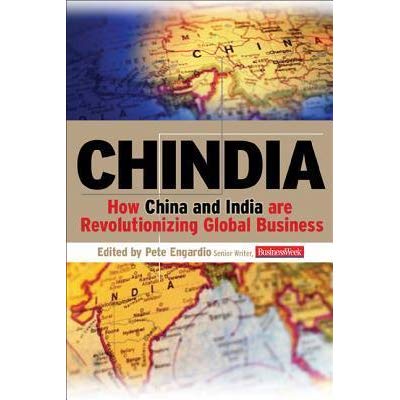
Review: CHINDIA part 2
This post is based on CHINDIA by Peter Engardio in 2006.
CHINDIA chapter 2: Characters of China and India
- Investment
China built its infrastructures first such as office towers, hotels, luxury villas, expressways,container terminals, airports, shopping malls, and public parks in a massive way. China designed to mobilized massive amount of capital.
India doesn’t use the investment like China did. In india’s major cities, by contrast, one feels stuck in a time wrap. Few new manufacturing plants are found outside the big cities. But some economists think India can sustain high growth longer, especially as savings and foreign investment increase. The cost of lowinvestment, however, has been slower economic growth, fewer people lifted out of poverty, and an industrial base a fraction of China’s size.
- Market Power
China and india are among the world’s most important consumer markets. The differents are, China’s capita income is triple bigger than India. India’s consumer class prefers quality goods at low prices. India is proving ground for companies selling 5-cent packets of shampoo, 2-cents-a-minute cellular service, and $100 PC.
- Industry Strength
In 2000, China exported $30.5 billion worth ofhigh tech products, in 2005, that rached $220 billion, 28% of China’s exports. With prices of Chinese-produced goods generally 30% to 50% below those in the U.S. critic claims the yuan is undervalued at least 30%. There is some truth to these charges. Intellectual property theft and dumping at below fair market prices are rampant. The low cost of China’s immense labor pool apply to first-rate engineers, managers, cargo handlers, and office staff as well as factory laborers.
What about india? India has its own power, those are valuable software design, and services. India’s economic role is better hidden. A hot Motorola wireless handset, Cisco network switch, or Philips imaging device may read “Made in China”, but much of the software and integration of multimedia technologies that yield the real profit margins may have been developed in India.
While most of America sleeps, Indian finance, marketing, and technical professionals perform the gamut of skilled work for U.S corporations. India’s proficiency in software and computer science is proving to be its entrée into the full spectrum of industries.
- Social challenges
Since WW2, China as a communist state, india as a democracy newly independent of a Britain-leaders of both nations have faced a similarly daunting dilemma: How to feed and employ immense, rapidly growing, poorly educated, multiethnic, improverished populations?
By unofficial estimates,200 millions Chinese and Indians lack full-time employment. So, china and India need strong, and sustained growth to keep living standards from deteriorating. Both nations face potential health crises. China could have as many as 10 millions AIDS victims and India 20 millions. China and India also face a demographic time bomb, India should manage population expected to reach 1.7 billion by mid-century.
- Business Culture
China’s business culture remains remarkably untransparent and tethered to the state. No media, including internet sites are free of government oversight nor are labor unions or even significant business associations. As a result, business success in China still requires careful nurturing of guanxi or connections with communist party officials and power brokers.
India’s business culture can’t be more different. Austere rule and suffocating bureaucracy prevented entrepreneurs from investing aggressively until the 1990s. national and local government agencies ignored physical infrastructure and did little to help industry with subsidies.
to be continued…
Review #1: CHINDIA part 1
Earth, a place for living. Everything, every single thing in this universe needs balance. So does economy. USA was the first ranker of biggest GDP in the world. But now, it’s China.
Chindia written by Peter Engardio. This book is about China and India, and how their economics grow. Mostly, economists said that they have somethings to grow bigger and top rankers in the future.
What are the reasons?
- Demographic
China and India are the first and the second the most populous country in the world. It affects the supply and demand of goods and services.
2. Investments
Investments are like petrol for a bike, or food for a human. Investments empower the human resources and natural resources. China’s investments are 42-45% of its GDP, and China’s economic growth is about 9. 5% per year. India’s investments are 22-25% of its GDP, and India’s economic growth is about 6% per year.
3. Technology
India’s brainpower getting invade around the world, China’s cheap goods invade around the world. They are bold and supported by technology and high quality human resources with low cost.
to be continued….
Strategy to Alleviate Poverty #1: Zakat and The Proofs
Poverty is not new thing for every country in the world. Poverty is not something that can be eliminated, but can only be reduced. Because, living standards and needs are always increasing, along with inflation that continues to occur. For example, there must be one person who is below the average living standard of the community. No matter how advanced the country is, there must be people who are at the bottom of all the people in that country. The poverty standard set by the World Bank, which is people who have an income of less than $ 2 per day. This is measured from PPP or purchasing power parity. The phenomenon of poverty that occurs cannot be measured from one field of science alone, but needs to be studied from various fields of science because poverty is a multidimensional problem. The point is, poverty is a problem that needs to be studied from all aspects, both from the aspects of economics, health, education, and politics.
Various ways have been taken by countries in the world to alleviate poverty, as has been implemented by the United Nations in all countries in the world starting from the MDGs, to the SDGs. MDGs is an acronym for the Millennium Development Goals, namely development goals that are based on several main points of social and environmental problems. The MDGs have 8 objectives, 18 targets and 48 indicators compiled by a series of experts from the UN secretariat, International Monetary Fund (IMF), Organization for Development and Economic Cooperation (OECD), and World Bank (Abilawa and Sudarsono, 2016). For more details, please visit the UN official website http://www.un.org/millenniumgoals/ The MDGs implemented from 2000 to 2015 have ended, now replaced by SDGs, namely the acronym of the Sustainable Development Goals which consists of five elements, namely human, planet, welfare, peace and partnership, to achieve three objectives noble in 2030 namely ending poverty, achieving equality and overcoming climate change. SDGs contain 17 goals and 169 development goals. For more details, please visit the UN official website https://www.un.org/sustainabledevelopment/sustainable-development-goals/The efforts that have been made should be appreciated because of a long and complicated process. However, it is better to glance at other alternatives that have higher effectiveness and focus. Some of them are the Grameen Bank which was implemented by M. Yunus, a scholar from Bangladesh who succeeded in empowering family heroes, and productive zakat applied by amil zakat institutions in Indonesia. Zakat means to issue a portion of assets with certain conditions to be given to certain groups (Mustahik) with certain conditions as well. (Hafidhuddin, 2002). In Islam, zakat is an obligatory for those who are able. Zakat is issued 2.5% of the net income of a Muslim. In a hadith narrated by Imam al-Asbahani from Imam at-Thabrani, in the book Al-Ausath and Al-Shaghir, the Messenger of Allāh: said that means: “Indeed Allah SWT has obliged the Muslim hajjers to oblige zakat to overcome poverty. It is not possible for an indigent person to suffer from hunger or lack of clothing, except for the stinginess that is in a wealthy Muslim . Remember, Allah SWT will do careful calculations and hold them accountable and will then torture them with painful torment “. In the hadith there is an affirmation that the participation of the upper class in alleviating poverty is a significant matter. In the hadith it is also emphasized that zakat is a social safeguard. The hadith also reminded of the large contribution of mischievous and miserly behavior towards poverty. From scientific articles written by Irfan Syauqi Beik, the analysis shows that zakat can reduce the number of poor families from 84 percent to 74 percent. Then from the depth aspect of poverty, zakat is also proven to be able to reduce the poverty gap and income gap, which is indicated by the decrease in P1 value from Rp 540,657.01 to Rp 410,337.06 and I value from 0.43 to 0.33. While in terms of the severity of poverty, zakat is also able to reduce the severity of poverty which is characterized by a decrease in the Sen Index value (P2) from 0.46 to 0.33 and the FGT index value from 0.19 to 0.11. This study is an undeniable proof that zakat instruments have extraordinary potential. But why is Indonesia still unable to become a developed country even though the role of zakat is very significant? Maybe this question is a basic question. Because, as I stated earlier, poverty is a multidimensional problem that does not only involve one study or scientific field to eradicate it, but from various lines of science. Such as education, health, policy, politics, state budget, income distribution, and others. Zakat is an alternative that can be optimized if all aspects involved in eradicating poverty work together to support zakat. For example, the entry of zakat into a country’s development planning, where in each village there are professional zakat managers who can involve volunteers in socializing, conducting censuses, and providing business incubators in the management of productive zakat funds. Zakat can also be used in the construction of free hospitals, free education, and development of community empowerment centers. Even BAZNAS (National Amil Zakat Institution)has empowered the assisted villages. Why is the village? Because the village is a region that has a poverty rate higher than the city, and has abundant natural resources. Without villages, food is powerless. Without villages, the balance of the environment is not maintained. Villages play an important role in social and environmental life. Finally, zakat and poverty alleviation are two things that are closely related. The need for support and cooperation of various parties involved in the two things above. Basically, all parties living on this earth are involved in the two things above if they want to see the miracle of zakat in realizing prosperity which is the dream of all people in this world. To get some new information about zakat, please visit http://puskasbaznas.com/national-zakat-index/nzi/download/72-nzi-2
Nilai Outstanding Sukuk dan Profitabilitas
Nilai outstanding sukuk adalah besaran nilai sukuk yang beredar di pasar modal, biasanya dipublikasikan oleh OJK setiap bulannya di http://www.ojk,go.id . latar belakang penerbitan sukuk oleh masing-masing perusahaan pun berbeda-beda, ada yang ingin melebarkan sayapnya, ada yang ingin melunasi hutang-hutangnya, ada yang ingin memperbaiki sistem manajemennya. keberhasilan pengelolaan investasi jangka panjang sebenarnya juga dipengaruhi oleh kinerja perusahaan itu sendiri. contohnya adalah salah satu perusahaan yang bergerak di bidang pangan yang memiliki nilai outstanding yang cukup fantastis dibandingnkan dengan perusahaan sejenisnya, akan tetapi ditinjau dari peringkat sukuk yang dimilkinya, perusahaan tersebut mengalami peringkat sukuk atau peringkat kredit yang terus menurun. peringkat yang dipeorleh dari A sampai D pada akhir tahun 2018. hal ini menandakan terjadinya default atau risiko gagal bayar. baru-baru ini saya melakukan penelitian pengaruh nilai outstanding sukuk terhadap ROE perusahaan. variabel dependennya adalah nilai outstanding sukuk, peringkat sukuk, dan total aset perusahaan. karena bahasan pada postingan kali ini hanya berfokus pada nilai outstanding sukuk, maka saya hanya akan membahas pengaruh outstanding sukuk terhadap ROE.
variabel X1 adalah nilai outstanding sukuk masing-masing perusahaan yang dipublikasikan oleh OJK selama 5 tahun. setiap tahunnya terdiri dari 12 kali publikasi, dan saya ambil nilai meannya. data yang saya olah merupakan tergolong ke dalam jenis data panel, menggunakan aplikasi pengolah data Eviews 9.
Hasilnya adalah nilai outstanding sukuk tidak berpengaruh signifikan terhadap ROE perusahaan. Hal ini menunjukkan bahwa besar atau kecilnya sukuk yang beredar tidak menentukan besar atau kecilnya nilai ROE (Return On Equity).
banyak faktor yang terlibat dalam penentuan nilai ROE, yaitu dari internal maupun eksternal, sehingga nilai adjusted r2 yang muncul dalam penelitian ini hanya 48%, sisanya ada faktor lain yang tidak dimasukkan ke dalam penelitian saya yang memiliki kontribusi dalam memengaruhi nilai ROE.
Sharia Economic
Sharia economic is an economic based on Alquran and sunnah. It is known as Islamic economic. So, what is sharia economic/ islamic economic in our real life? what’s the concrete example of it?
Buy halal things or foods from a shop, lend money to someone without asking for interest, empowering the poors by giving them training and education or money, also keep your environment safe from your damaging habbit.
Sharia economic is exist in every economic activities. So, banking and insurance aren’t the only things discussed in sharia economic system. There are a lot of things involved.
Sharia economic isn’t difficult at all, because it is based on a simple condition “Don’t harm the others, and don’t get harmed!”
who can be involved in sharia economic activities? Everyone! Sharia economic wasn’t made for muslims only, it is for the whole world, for us.
Let’s start doing activities by using sharia economic system for a peaceful life. Do you want a prove ? Keep reading my blog.
T
I like riddles but i don’t like it when i should do something more important. I have priorities and random mind.
So, im not gonna try to show you things like KPOP or dancing. Im gonna post about ECONOMIC, FINANCE, ISLAMIC ECONOMIC ISSUES, ENVIRONMENT, AND SOCIAL THINGS.
What about me? Nothing to say, but stay tuned!
 T Y W O R D S